Skip to content
Indus River Basin

Indus River Basin

  • Home
  • Indus River Basin
    • Introduction
    • Surface Water Resources
      • Eastern Rivers
        • Sutlej River
        • Beas River
        • Ravi River
      • Western Rivers
        • Chenab River
        • Indus River
        • Jhelum River
        • Kabul River
        • Minor Rivers
          • Astore River
          • Chitral River
          • Dras River
          • Gilgit River
          • Gomal River
          • Hunza River
          • Kurram River
          • Shyok River
          • Haro River
          • Soan River
          • Suru River
          • Swat River
          • Tochi River
          • Zanskar River
          • Zoab River
    • Doabs
      • Bari Doab
      • Bist Jalandhar Doab
      • Chaj Doab
      • Rachna Doab
      • Sindh-Sagar Doab
    • Delta
    • Groundwater Resources
  • Treaties
    • Inter-Dominion Agreement – 1948
      • Introduction
      • History
      • Negotiations
      • Outcome
    • Indus River Basin Treaty – 1960
      • Introduction
        • Articles
        • Annexes
        • Addendums
      • History
      • Negotiations
      • Outcome
      • Financial Arrangements
      • Implementation
      • Disputes
      • Resolution
  • Indus Irrigation System
    • Upper Indus Plain
      • Canals
        • Upper Bari Doab Canal
      • Barrages
      • Dams
    • Lower Indus Plain
      • Lower Bari Doab Canal
  • Groundwater Resources
  • Hydrometeorology
  • Climate Change
  • Media
    • Press Articles
    • YouTube
    • Reports
  • Academic Resources
    • Books
    • Lectures
  • Maps
  • Videoconferences
  • Toggle search form

Jhelum River

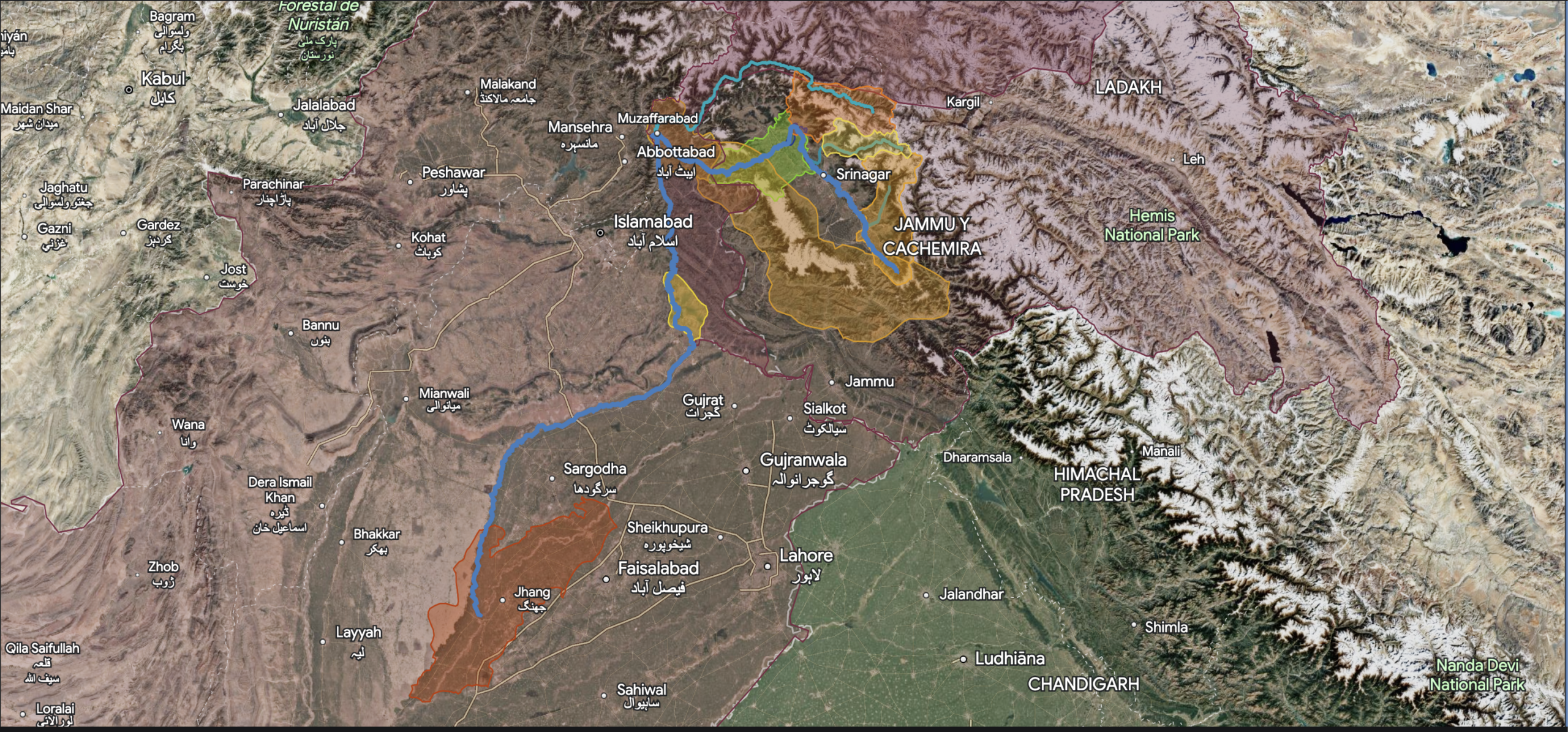
The Jhelum River is the westernmost of the five rivers of the Punjab and the primary waterway of the Kashmir Valley. Flowing for about 725 kilometers, it originates from the Verinag Spring in Jammu and Kashmir, passes through Srinagar, crosses into Pakistan, and joins the Chenab River.
Leave a Reply Cancel reply

You must be logged in to post a comment.